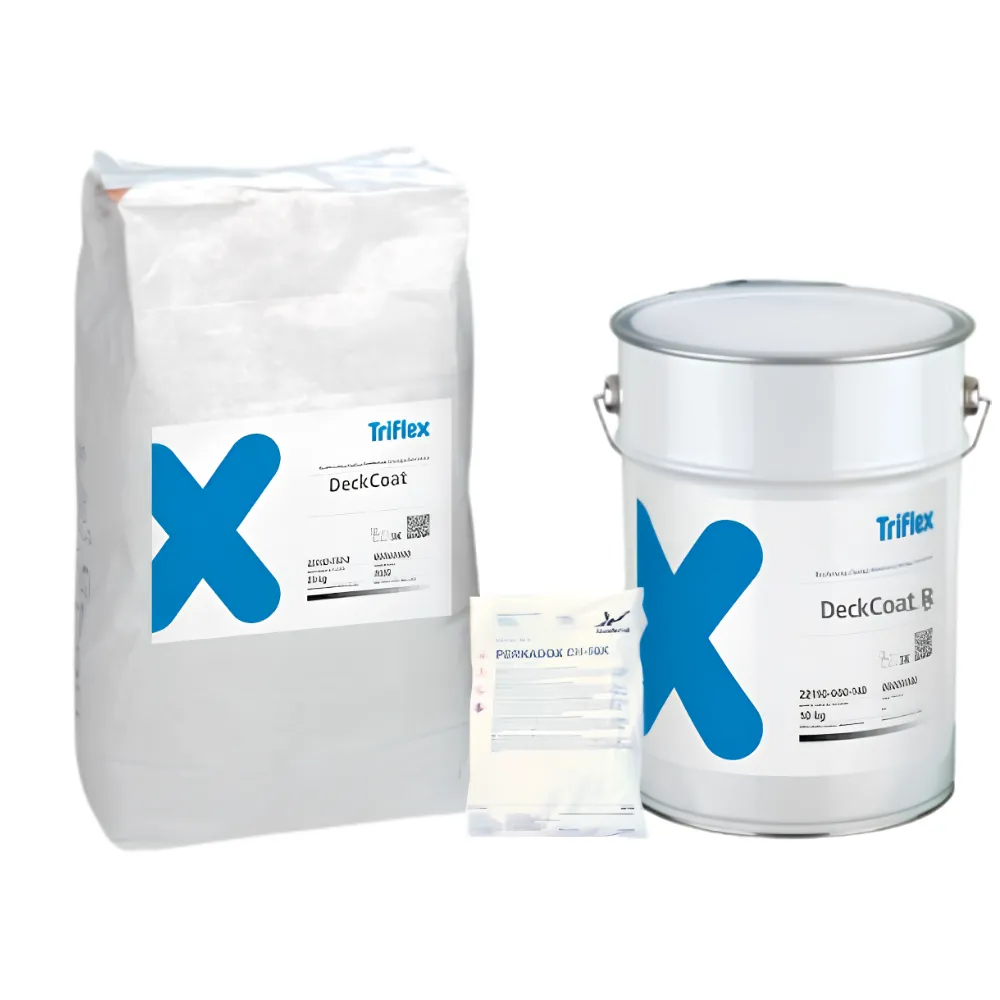

Triflex DeckCoat Thin-Coat Flooring System for Intermediate Parking Decks with Fast Curing and Slip Resistance
Triflex DeckCoat is a thin-layer floor coating system based on PMMA resin, developed specifically for intermediate parking decks, particularly areas with relatively low traffic volumes, such as parking spaces and general traffic areas. The system helps protect floor surfaces against moisture, enhances durability, and creates a slip-resistant surface to improve safety for vehicles and parking garage users.
One of its key advantages is that the resin can cure within a few hours, allowing installation work to be divided into sections and multiple application stages to be completed within the same day. This helps reduce downtime for parking spaces, entrances, and traffic routes compared to systems based on epoxy or polyurethane resins.
Key Features of Triflex DeckCoat
Thin-layer floor coating system designed for parking structures
Uses fast-curing PMMA resin
Suitable for open-sided intermediate parking decks and parking areas with relatively low traffic volumes
Enhances surface slip resistance through quartz sand broadcasting
Helps reduce the risk of slipping for vehicles and pedestrians
Easy-to-clean surface after installation
Allows installation work to be divided into zones to minimize operational disruption
Available in a wide range of finish colors
Joints and construction details can be reinforced with fleece-reinforced waterproofing systems
Complies with Class OS 8 surface protection system requirements
Classified as Cfl-s1 for reaction to fire in accordance with DIN EN 13501-1
Suitable Applications for Triflex DeckCoat
Triflex DeckCoat is suitable for areas within parking structures that require a lightweight, fast-installing floor coating system with improved traffic safety, such as:
Intermediate floors of multi-storey parking garages
Open-sided intermediate parking decks
General parking spaces
Vehicle access lanes with relatively low traffic volumes
Parking areas requiring refurbishment of existing floor surfaces
Areas where maintenance downtime needs to be minimized
Areas requiring color-coded parking spaces or designated traffic routes
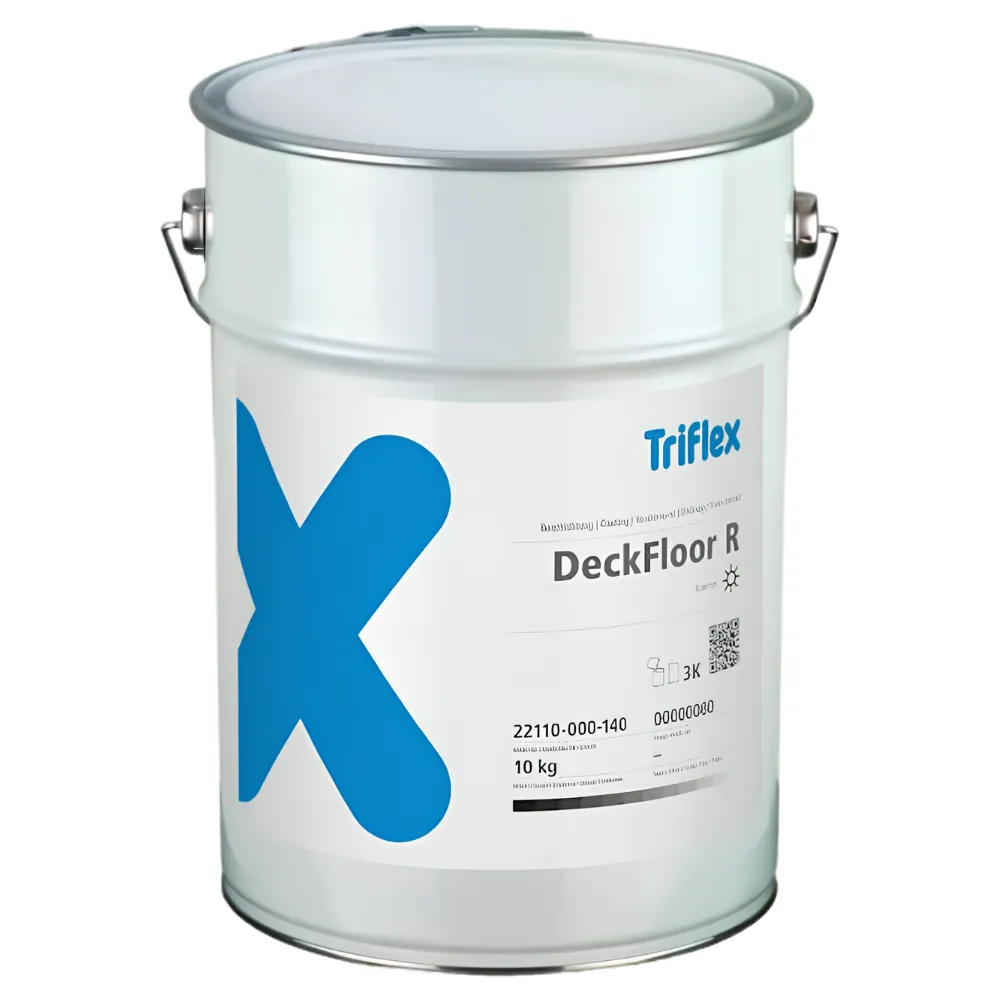
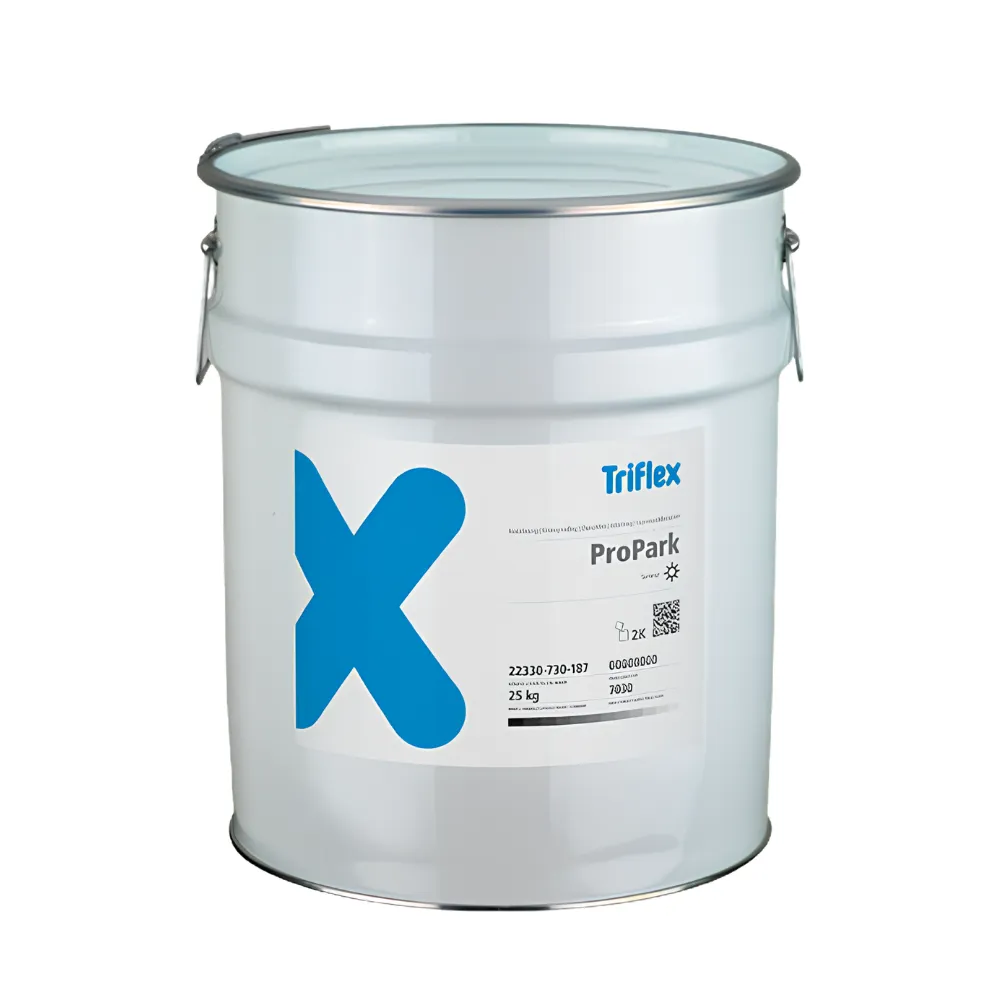
This system is designed for surfaces subjected to relatively light traffic loads. For ramps, curves, turning areas, entrances and exits, or areas exposed to high shear forces and braking stresses, more heavy-duty systems such as Triflex DeckFloor, Triflex ProDeck, or Triflex ProPark should be considered according to site conditions and project requirements.
Surface Safety Properties
The system uses quartz sand with a particle size of approximately 0.7–1.2 mm to create surface texture and improve slip resistance, helping reduce the risk of slipping for vehicles and pedestrians. The surface roughness and slip resistance level must be selected according to the actual application area.
The finishing layer uses Triflex Cryl Finish 209, which is designed to enhance resistance to mechanical stresses and chemicals while making the surface easier to maintain and clean.
General System Structure
1. Substrate Preparation and Priming
The substrate must be sound, clean, dry, and free from dust, oil, grease, loose existing paint, or contaminants that may reduce adhesion. The primer must be selected according to the existing substrate material. The system includes several primer options, such as:
Triflex Cryl Primer 287 for absorbent substrates such as concrete, screeds, or wood, with a minimum consumption of approximately 0.35 kg/m²
Triflex Pox Primer 116+ for priming, surface sealing, or leveling surface irregularities, with a consumption of approximately 0.30–0.40 kg/m²
Triflex Metal Primer for metal surfaces and areas with rust, with a consumption of approximately 0.15 L/m²
Triflex Glass Primer for unabraded glass surfaces, with a consumption of approximately 0.05 L/m²
These consumption rates are based on smooth, even surfaces. Actual consumption may increase depending on substrate roughness, absorbency, and existing surface conditions.
2. Coating and Slip-Resistant Surface Layer
The system uses Triflex Cryl Finish 209 in combination with quartz sand broadcasting to create a slip-resistant surface. The consumption of Triflex Cryl Finish 209 is approximately 0.50–0.70 kg/m² on smooth surfaces, depending on the application area and system configuration.
3. Finishing Layer
Triflex Cryl Finish 209 is used as the final surface coating to enhance resistance to mechanical stresses and chemicals. It is also available in various colors to suit parking garage zoning and layout requirements.
4. Joint and Detail Waterproofing System
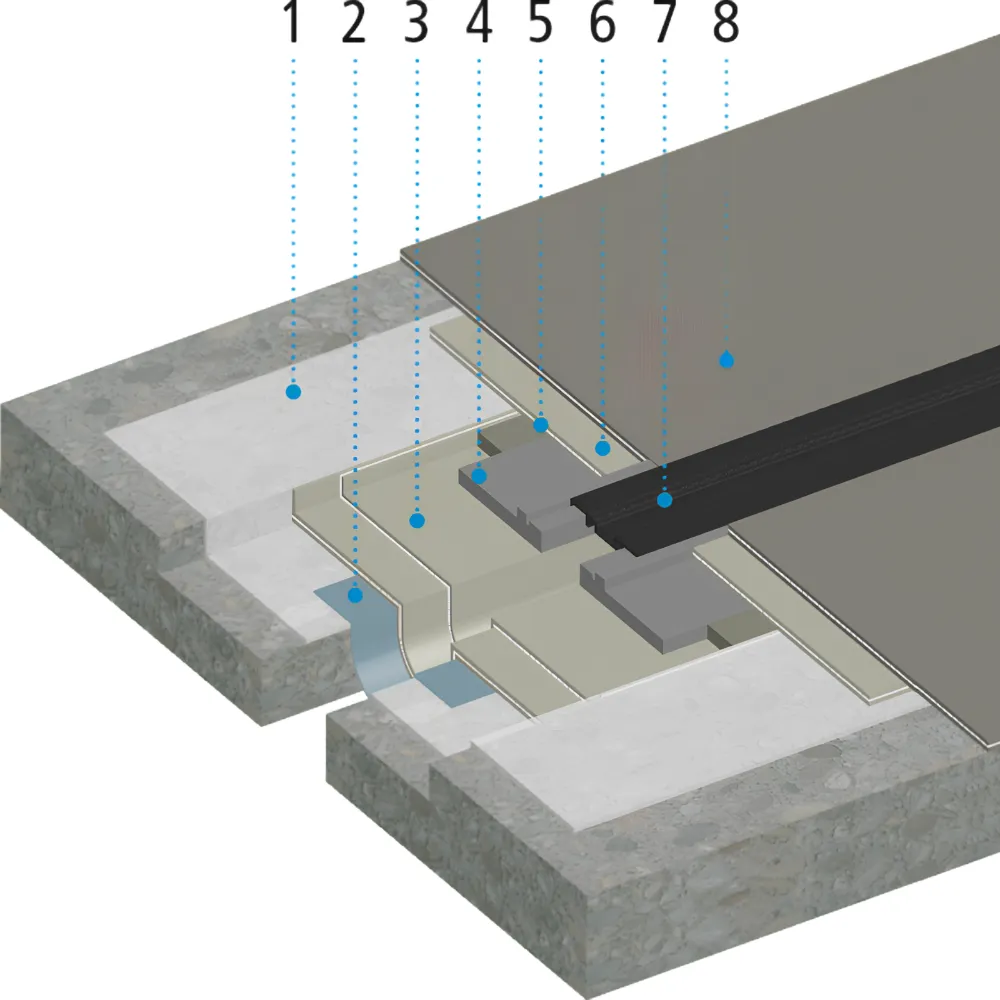
At walls, columns, floor edges, drainage outlets, joints, and connection points, Triflex ProDetail can be used in combination with Triflex Special Fleece to create a fleece-reinforced waterproofing system that integrates continuously with the main floor surface.
Triflex ProDetail has a minimum consumption of approximately 3 kg/m² on smooth surfaces. Triflex Special Fleece provides reinforcement and helps control the thickness of the waterproofing layer at construction details.
Supplementary and Repair Materials Used with the System
For uneven or damaged existing floors, additional materials can be selected according to site conditions, such as:
Triflex Cryl RS 240: Fast-curing repair mortar for floor repairs and exterior applications with thicknesses of approximately 5–50 mm. Consumption is approximately 2.20 kg/m² per 1 mm of thickness.
Triflex Cryl Paste: Used for leveling irregularities, fleece overlaps, or surface grooves. Consumption is approximately 1.40 kg/m² per 1 mm of thickness.
Triflex FlexFiller: Used for filling and sealing joints.
Triflex DeckFloor: Can be used as a heavy-duty coating or leveling layer in certain areas, with a minimum consumption of approximately 4 kg/m² on smooth surfaces.
Fast Installation and Reduced Downtime
The PMMA resin used in the system can cure within a few hours, allowing installation work to be carried out in separate zones and multiple application stages to be completed within the same day. This helps reduce the time parking spaces or traffic routes must remain closed, making it suitable for parking structures that cannot be completely shut down for extended periods.
Actual curing times and reopening times may vary depending on temperature, weather conditions, humidity, substrate conditions, material consumption, and the selected system configuration. Therefore, installation must follow the manufacturer’s latest system planning documentation and product data sheets.
Color Design and Area Zoning
Triflex DeckCoat is available in a wide range of finish colors. Different colors can be used to distinguish parking levels, designate parking spaces, define vehicle routes, create visual pedestrian walkways, or highlight special parking spaces.
Using contrasting colors helps users identify locations and navigate parking structures more easily while improving visibility and traffic safety.
Standards and Certifications
The Triflex DeckCoat system complies with Class OS 8 surface protection system requirements in accordance with the guidelines of the German Committee on Reinforced Concrete and relevant standards for the protection and repair of concrete structures.
The system is also classified as Cfl-s1 for reaction to fire in accordance with DIN EN 13501-1, which defines the fire performance classification of flooring materials.
Considerations Before Installation
Substrate strength, moisture content, cracks, joint movement, surface slopes, and drainage systems should be inspected before installation. Surfaces subject to cracking, movement, or high shear forces may require additional reinforcement or a more heavy-duty coating system than Triflex DeckCoat.
The primer type, quartz sand consumption, surface roughness, finish color, and joint detailing must be selected according to the substrate conditions and actual service requirements. Installation should be carried out in accordance with the latest Triflex system documentation and by experienced applicators.