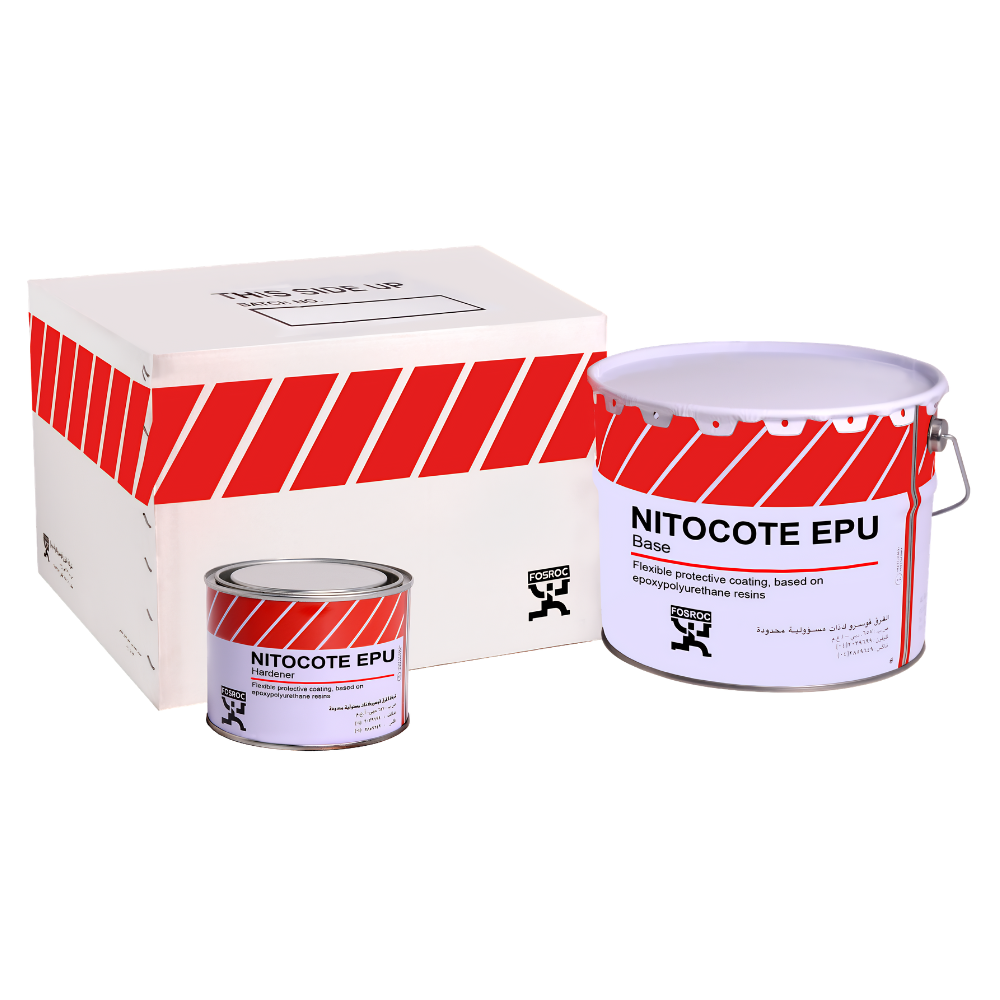
Nitocote EP403 Product Description
Nitocote EP403 is supplied as a two-component, solvent-free epoxy resin material in pre-measured quantities, ready for on-site mixing and application. Once cured, the material forms a smooth, strong, and durable surface.
Applications (Uses)
Nitocote EP403 is a protective coating for concrete and steel surfaces. It is particularly suitable for applications where concrete substrates are damp and cannot be completely dried.
Once fully cured, the material forms a coating film that is resistant to corrosion, chemicals, and abrasion. It is suitable for applications in the following areas:
Wastewater treatment facilities
Marine environments
Basements
Tunnels
Product Advantages (Advantages)
Can be applied as a high-build coating (High Build Application)
Suitable for use in confined or enclosed spaces
Can be applied directly to steel and concrete surfaces
Provides a smooth, glossy finish that is easy to clean
Resistant to corrosion, chemicals, and abrasion
Can be applied to damp substrates
Product Description (Description)
Nitocote EP403 is a two-pack, solvent-free epoxy resin coating.
The product is supplied in pre-measured kits containing components in the correct proportions, ready for on-site mixing and application.
Once fully cured, the material forms a smooth, strong, tough, and durable coating film with corrosion-resistant properties. The product is available in grey.
Product Specification (Specification)
Corrosion, Chemical and Abrasion Resistant Lining
The coating material used for protection against chemicals and abrasion shall be Nitocote EP403, a solvent-free epoxy product specially designed for application to damp substrates.
The product shall form a tough, strong, impermeable coating film capable of resisting the conditions of the service environment.
Design Criteria (Design Criteria)
Nitocote EP403 is designed to be applied in 2 coats to achieve a minimum total dry film thickness of 400 microns.
To achieve the protective performance specified for the product, Nitocote EP403 must be applied to the substrate at the consumption rate recommended by the manufacturer.